Effective Online Python Classes for Kids That Work
A child who can explain why their code broke – and then fix it – is learning far more than syntax. That is why so many parents are searching for online python classes for kids. Python is not just a trendy coding language. It is a practical way to teach logic, persistence, creativity, and structured problem-solving at an age when confidence in STEM can either grow or quietly slip away.
For families, the real question is not whether Python is worth learning. It is whether the class format, teacher quality, and level of support will actually help a student make progress. A flashy platform may hold a child’s attention for a week. Strong instruction changes how they think.
Why online python classes for kids matter
Python is one of the best first programming languages for students because it is readable, flexible, and widely used. Kids can start with simple commands and build toward games, automation, data projects, and more advanced computer science concepts without getting buried in confusing syntax too early.
That said, not every child benefits from learning Python in the same way. A motivated middle schooler who loves puzzles may move quickly and enjoy challenge-based coding tasks. An elementary student may need a slower pace, visual explanations, and more guided practice. A high school student may be looking ahead to future coursework, AP-level computer science pathways, or technical enrichment that strengthens a college-ready profile.
This is where class design matters. The best online programs do not simply teach kids to copy code from a screen. They teach students how to understand patterns, test ideas, find errors, and improve their work. Those are the habits that build real academic strength.
What separates a strong Python class from a weak one
Parents often compare programs based on cost, schedule, or whether the website looks polished. Those details matter, but they are not the main predictors of results. The strongest online coding classes usually share a few deeper qualities.
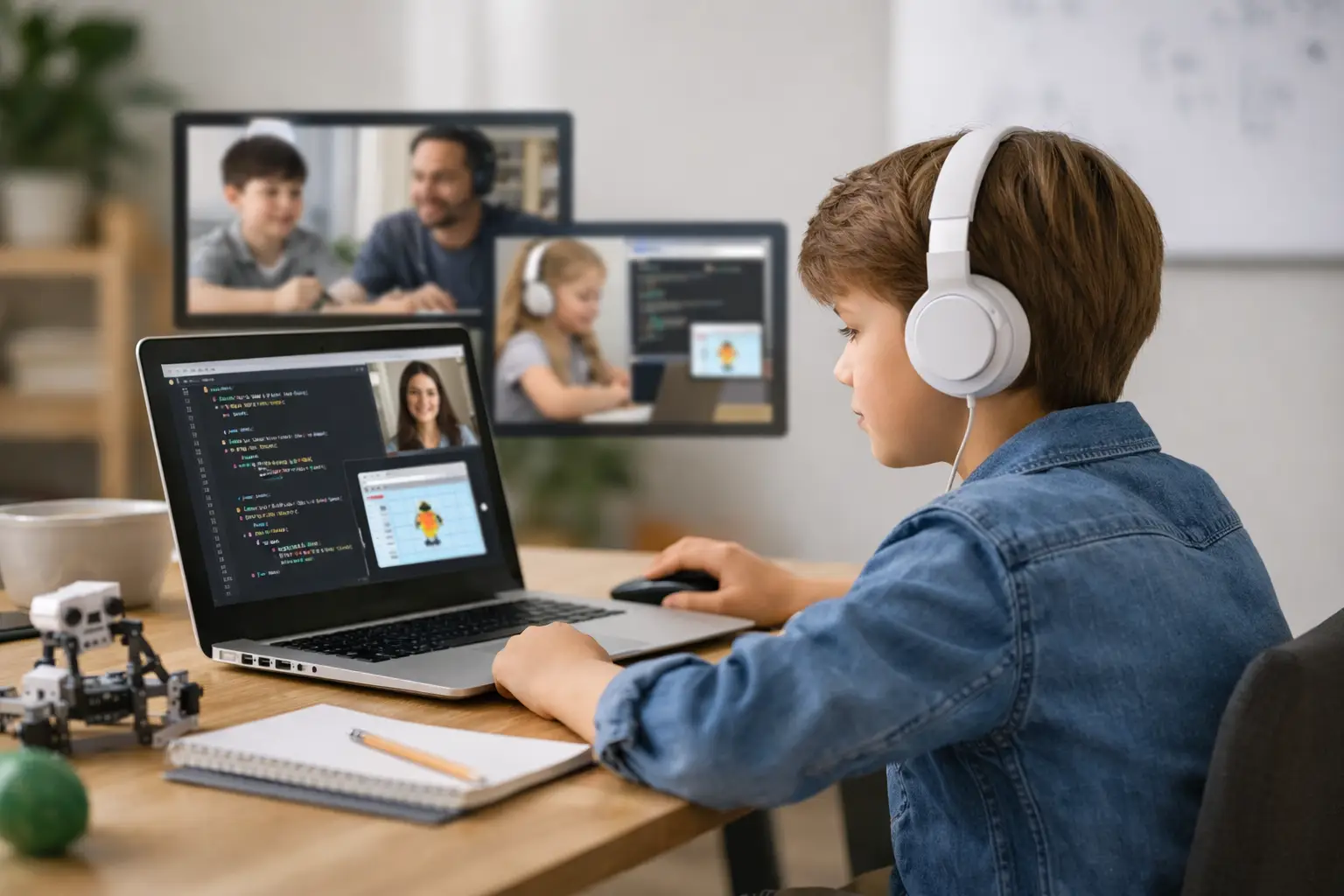
First, they use live instruction or meaningful teacher feedback. Self-paced coding platforms can be useful for practice, but many students hit a wall when they do not understand why something failed. Without a teacher who can spot the misunderstanding, frustration builds quickly. In live classes, students can ask questions in real time and learn how to reason through problems.
Second, strong programs place students at the right level. This is more important than many parents realize. If a child enters a class that is too easy, they disengage. If it is too advanced, they begin to believe coding is not for them. Careful placement helps students build momentum, which is one of the biggest drivers of confidence.
Third, good classes balance structure with creativity. Children need clear skill progression – variables, loops, conditionals, functions – but they also need projects that make those concepts feel meaningful. When students build something of their own, even a simple game or calculator, the learning sticks.
Finally, strong programs communicate progress. Parents should not have to guess whether their child is improving. A serious academic program gives families visibility into what the student is learning, where they are struggling, and what comes next.
Who benefits most from Python classes
Python is often a strong fit for students in upper elementary, middle school, and high school, but readiness depends more on attention span, reading ability, and interest than age alone. Some younger learners thrive when instruction is interactive and carefully scaffolded. Some older students need a true beginner course because they have never coded before.
Students who tend to benefit most include kids who enjoy problem-solving, students who like computers or games, and learners who need a confidence boost in STEM through a subject that feels practical and modern. Python can also be especially valuable for students who are mathematically capable but have not yet found a STEM subject that feels exciting.
There is also a less obvious group that can benefit – students who struggle with confidence. Coding creates a visible feedback loop. The code works or it does not. With the right teacher, that process becomes empowering rather than discouraging. Students learn that mistakes are not proof of inability. They are part of building skill.
What parents should look for in online python classes for kids
A good class should feel structured, but not rigid. There should be a clear sequence of skills, regular opportunities to practice, and room for teacher support when a student gets stuck. If every session is pure lecture, students tune out. If every session is unstructured play, gaps appear fast.
Class size matters too. In a large group, quiet students can disappear. In a smaller class, the teacher can actually see how each child is thinking. That is often the difference between passive exposure and active learning.
Parents should also ask how projects are used. Projects are not just there to make the class look fun. They should reinforce specific concepts. A game built with loops and conditionals is useful because it turns abstract ideas into something concrete. A random project with little explanation may entertain, but it does not always build mastery.
Another factor is teacher expertise. A strong Python instructor is not simply someone who knows how to code. They need to know how to teach children, explain concepts clearly, and adjust when a student is confused. That mix of subject mastery and teaching skill is where real growth happens.
Common mistakes families make when choosing a coding program
One common mistake is assuming that more advanced always means better. Parents understandably want challenge, but acceleration without foundation creates shaky learning. A student who rushes past the basics may produce projects they do not truly understand.
Another mistake is choosing a program based only on entertainment value. Engagement matters, especially for kids, but a course should do more than keep them busy. It should build durable skills that carry into school, future coding classes, and broader STEM learning.
Some families also underestimate the value of consistency. A one-time workshop can spark interest, but steady instruction is what builds fluency. Coding is similar to math in that way. Students grow when they practice regularly and receive guidance over time.
How Python supports long-term academic growth
Parents often start with coding because it feels future-oriented, and that instinct is right. Python introduces students to computational thinking in a way that supports many academic pathways. It strengthens logic, attention to detail, pattern recognition, and analytical reasoning. Those are not niche skills. They support success across STEM subjects.
For some students, Python becomes a gateway to deeper computer science study. For others, it simply strengthens confidence in tackling technical material. Both outcomes matter. Not every child who learns Python will become a software engineer. But many will become stronger thinkers, more independent learners, and more confident students.
That is especially valuable in a school environment where many students move through STEM classes without ever feeling truly capable. A well-taught coding class can shift that story. It gives students a chance to solve real problems, see their own progress, and develop pride in what they can create.
At Avatar Learning Center, that is exactly why structured coding instruction matters. Students do best when they are placed carefully, taught by experts, and given the support to build both mastery and confidence over time.
The best class is the one your child can grow in
There is no single perfect format for every learner. Some children thrive in small group classes where they can learn alongside peers. Others need one-on-one support to move at the right pace. Some want enrichment and creative challenge. Others need help building a basic foundation before they can enjoy the subject.
What matters is finding a program that treats coding as serious learning, not digital babysitting. The right online Python class helps a child think more clearly, persist through challenges, and see themselves as capable in STEM.
When a student begins to say, “I figured it out,” that moment carries weight far beyond one coding lesson. It is the beginning of confidence, and confidence is often what changes a child’s academic future.