
Online Math 3 Classes | Live, twice a week, one hour each
Online Math 3 Classes: Multiplication, Division and Fractions
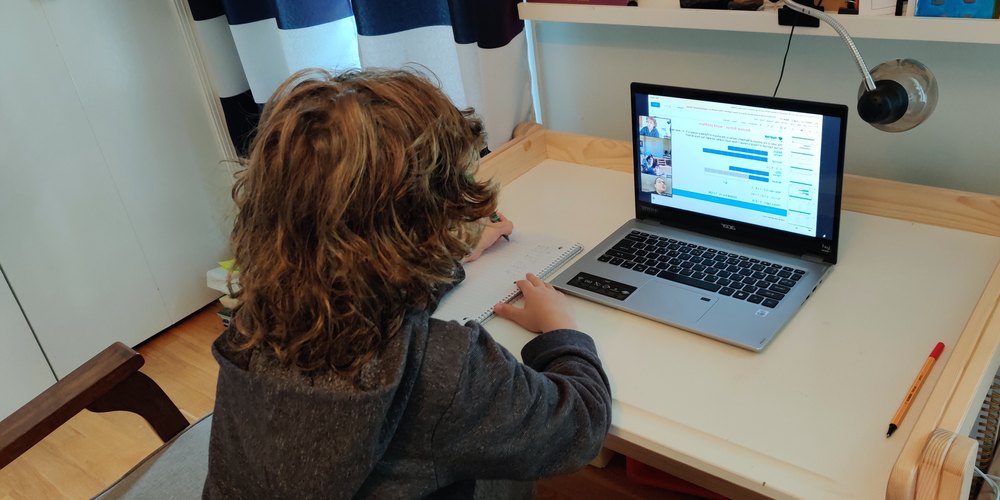
Math 3 is for children in grade 3. It covers multiplication and division, area and perimeter, the order of operations, fractions and decimals. Classes are live online, interactive and engaging, twice a week for one hour, in a small group of 5 to 6 students, never more than 8, so every child takes part. A free placement assessment places your child in one of three levels: catching up, extra practice or advanced.
About this course
What Math 3 at Avatar Covers
Each week has two classes. Each class has its own goals and ends with an exit ticket, and many weeks include brain teasers.
The course starts with addition strategies, skip counting and multiplication. It then covers area and perimeter, the order of operations, unknowns, time and division. Fractions and decimals take the longest stretch of the year, and the course closes with rounding, review and measurement.
By the end of the course
What Students Can Do After Math 3
Addition strategies
Add and subtract with strategies such as adding 9, 10 and 11, stacking and stepping to the nearest ten.
Multiplication and division
Multiply with the times tables, doubling tricks and area models, and divide using fact families and the divisibility rules.
Order of operations and unknowns
Use parentheses and the order of operations, and solve equations with an unknown, including word problems.
Area, perimeter and time
Find area and perimeter, including compound shapes, tell time, find elapsed time and convert units of length.
Fractions
Name, compare, simplify, add and subtract fractions and mixed numbers, and find a fraction of a set.
Decimals and rounding
Write tenths and hundredths as decimals and fractions, place them on a number line, and round to the nearest 10 or 100.
Course content
The Syllabus, Unit by Unit
Open a unit to see its topics. All three levels follow the same units; the pace, depth and amount of practice differ. Every week has a live class and a homework set checked in the student portal.
Unit 1Number sense and addition strategies5 topics
Expanded form, skip counting, the commutative and associative properties of addition, sum and difference, fact families, stacking, and adding and subtracting 9, 10 and 11. Multiplication facts start through skip counting, and even and odd numbers close the unit.
- Standard and Expanded Form, Multiplication through AdditionClass 1 covers standard and expanded form, skip counting with 5s to 9s and the commutative property of multiplication. Class 2 introduces multiplication as repeated addition, adds and subtracts 9, 10 and 11, and ends with word problems and number riddles.
- Properties of Addition and Skip Counting by 3 and 4Class 1 teaches addends and sum, the commutative property of addition and skip counting by 3, with input-output rules and word problems. Class 2 reviews them and adds the associative property and skip counting by 4, ending with Guess the Number riddles.
- Skip Counting by 4, 5 and 10 and the Addition-Subtraction ConnectionClass 1 practices skip counting by 4, forwards and backwards, and multiplication by 4. Class 2 covers skip counting by 5 and 10, adding and subtracting 10, fact families and checking a subtraction with addition.
- Sum and Difference, Strategies and Stacking AdditionClass 1 defines sum and difference and teaches stepping to the nearest ten, with word problems that use the terms. Class 2 adds two-digit numbers by stacking, introduces magic squares and returns to input-output tables and expanded form.
- Adding and Subtracting 9, Even and Odd NumbersClass 1 teaches adding and subtracting 9 and keeps practicing stacking, Guess the Number riddles and skip-counting puzzles. Class 2 teaches even and odd numbers and how they behave when added and subtracted, with word problems.
Unit 2Multiplication, area and the order of operations4 topics
Multiplication as repeated addition and the commutative property, area and perimeter of the rectangle, multiplying by whole tens, parentheses, the order of operations and multiplication tricks for 2, 4, 5, 8, 9 and 10.
- The Concept of Multiplication and Sharing ProblemsClass 1 explains multiplication as repeated addition, groups and arrays, the commutative property and sharing problems. Class 2 continues with multiplication input-output tables and multiplication word problems.
- Area and Perimeter of the RectangleClass 1 reviews area as unit squares and links it to multiplication. Class 2 introduces perimeter, then finds a missing side of a rectangle from its area and works out the perimeter.
- Computing Area and Perimeter, Multiplying by Whole TensClass 1 computes the area of a rectangle by multiplying length by width and the perimeter by adding all sides, then finds a missing side. Class 2 reviews multiplying by whole tens, with word problems and more missing-side problems.
- Parentheses, Order of Operations and Multiplication TricksClass 1 introduces parentheses and turns words into expressions, with multiplication tricks for 2, 4, 5 and 10. Class 2 teaches the order of operations (parentheses, then multiply and divide, then add and subtract) and tricks for 8 and 9.
Unit 3Unknowns and time3 topics
Part + part = whole, the idea of an unknown and equations such as X + 5 = 23, then telling time and elapsed time.
- Part plus Part equals Whole and the Idea of an UnknownClass 1 introduces part + part = whole and the unknown, with equations such as X + 5 = 23 and X − 12 = 65. Class 2 solves for X in more forms and in word problems, and has students write a word problem for an equation.
- Telling Time, Elapsed Time and UnknownsClass 1 teaches reading the hour and minute hands and finding elapsed time, with more equations with unknowns. Class 2 covers elapsed-time word problems, multiplying by 5 to read minutes, and tables with two-step rules such as 2 × P + 4.
- Multiplying by 6 and 7, Order of Operations and Elapsed TimeClass 1 practices multiplication by 6 and 7, the order of operations (P.E.M.D.A.S.) and elapsed time. Class 2 adds word problems, converting days, hours, minutes and seconds, finding two numbers from their sum and difference, and multi-step problems.
Unit 4Division and divisibility4 topics
Division as sharing and as groups, fact families, division terminology, division word problems and the divisibility rules for 2, 3, 4, 5, 6 and 10.
- Introduction to Division and Fact FamiliesClass 1 introduces division as sharing and as groups, its link to multiplication facts, fact families and division word problems. Class 2 names dividend, divisor and quotient and practices true-or-false division sentences and word problems.
- Division Word Problems and Divisibility RulesClass 1 continues division word problems, including finding a missing side from the area, and reviews clock time. Class 2 teaches the divisibility rules for 2, 5 and 10 and practices fact families and input-output tables that divide.
- Divisibility Rules for 2, 3, 4, 5, 6 and 10Class 1 reviews the rules for 2 and 10 and teaches divisibility by 4 and by 3. Class 2 reviews 3 and 5, teaches divisibility by 6 and sorts a list of numbers by each rule. Both classes include division word problems.
- Factors and Multiples, Metric Units and DivisibilityClass 1 covers multiplying and dividing by 10 and 100, division patterns, and the terms factor, product and multiple. Class 2 teaches metric units and prefixes, then reviews division terms, the distributive property and the divisibility rules in one table.
Unit 5Fractions and decimals9 topics
Fractions on the number line, improper fractions and mixed numbers, equivalent fractions, adding, subtracting, comparing and simplifying, fractions of a set, and decimals as tenths and hundredths.
- Introduction to FractionsClass 1 introduces fractions as equal parts, numerator and denominator, number lines, improper fractions and mixed numbers. Class 2 covers fractions in real life, same-denominator addition and subtraction, and converting mixed and improper fractions.
- Fractions into Decimals and Lines of SymmetryClass 1 puts fractions on the number line, solves and makes up fraction word problems, and introduces decimals as another way to write a fraction. Class 2 simplifies fractions, converts decimals and fractions both ways and draws lines of symmetry.
- Equivalent FractionsClass 1 explains equivalent fractions with the pizza question and with bars and circles. Class 2 teaches the rule for making equivalent fractions, reviews mixed and improper fractions, and adds and subtracts same-denominator fractions in word problems.
- Adding and Subtracting Fractions with Different DenominatorsClass 1 shows why equivalent fractions matter, then adds and subtracts fractions with different denominators using a common denominator. Class 2 practices finding equivalent fractions and gives more addition and subtraction, with sums written as mixed numbers.
- Comparing and Simplifying FractionsClass 1 reviews adding and subtracting fractions, then teaches comparing fractions with different denominators and fraction word problems. Class 2 teaches simplifying fractions, with more comparing, word problems and fractions of an hour.
- Fractions on the Number Line, Decimals and SymmetryClass 1 has fractions on the number line and fraction word problems; class 2 has decimals as tenths and hundredths, fractions and decimals both ways, and lines of symmetry.
- Fractions of a SetClass 1 introduces finding a fraction of a set by dividing, and 2/3 of a number by finding one part first. Class 2 continues with fractions of a set in word problems and adds fractions, writing the sum as a mixed number.
- Fractions of a Set, Mixed Numbers and DecimalsClass 1 continues fractions of a set, including word problems and working backwards, and shows how many halves, thirds or quarters a mixed number holds. Class 2 continues them and reviews decimals: tenths, hundredths, money and the number line.
- Mixed Numbers and Fraction ReviewClass 1 practices fraction word problems, two-step fractions of a set and conversions between mixed numbers and improper fractions. Class 2 reviews the whole fraction toolkit, then adds and subtracts mixed numbers.
Unit 6Rounding and multiplying larger numbers2 topics
Rounding to the nearest 10 and 100 and comparing fractions with numerator 1, then the distributive property, stacked multiplication and area models for two-digit numbers times one-digit and two-digit numbers.
- Rounding, Estimating and Comparing FractionsClass 1 teaches rounding to the nearest 10 and 100 and compares fractions with numerator 1 on number lines. Class 2 adds rounding puzzles and word problems, filling in + or × to make expressions true, and more comparing of fractions.
- Distributive Property and Stacked MultiplicationClass 1 reviews the distributive property and teaches stacked multiplication of a two-digit by a one-digit number, then area models. Class 2 uses area models for two-digit by two-digit products and adds area and perimeter puzzles.
Unit 7Review, measurement and problem solving5 topics
Review of the order of operations, equations, divisibility rules, perimeter and area, then compound areas, units of length, expressions, age problems and number sense.
- More Review of Operations, Equations and DivisibilityA second review week with new problems. Class 1 adds longer order-of-operations expressions and word problems that turn into equations. Class 2 adds the divisibility rule for 9, a two-step input-output rule and balancing equations.
- Perimeter, Area and Division ReviewClass 1 reviews perimeter, including shapes with missing sides and regular polygons, and the divisibility rules. Class 2 reviews perimeter and area by drawing rectangles, working backwards from the area and the order of operations.
- Compound Areas and Units of MeasurementClass 1 finds the area of compound shapes and teaches customary units of length with conversions between inches and feet. Class 2 converts feet and yards, then teaches metric units and prefixes, and ends with adding and subtracting 9, 10 and 11.
- Expressions, Age Problems and Number SenseClass 1 writes and evaluates expressions with variables, reviews fractions, and solves number-sense problems about consecutive numbers. Class 2 solves age problems and more number-sense questions, including Kangaroo-style ones.
- FUN Class - the Best Problems of the YearA FUN class. Class 1 gathers favorite problems: missing numbers and digits, inserting + or −, patterns, listing numbers. Class 2 has magic squares, comparing with <, > or =, an optional sum-and-difference trick, a look back at the year and a review game.
The advanced level also covers
- Stacking Addition & Subtraction, Mental Math and Logic
- Addition Review, Multiplication Properties and Consecutive Numbers
- Area of a Rectangle and the Distributive Property
- Area of a Rectangle, Composite Shapes and Perimeter
- Order of Operations, Parentheses and the Reverse Distributive Property
- Order of Operations, Reverse Distributive Property, and Area Models
- Multiplication by Stacking, Factors, and Thinking Backwards
- Multiplication, Division and Remainders
- Divisibility Revisited and Division with Remainders
- Remainders, Factors, Multiples and Factoring
Three levels, same syllabus
Which Math 3 Class Is Right for Your Child?
All three levels follow the same units, so a student can move between them during the year. The difference is pace, depth and how much practice each topic gets.
Catching up
For students who arrive with gaps. Core skills get more time and more practice before the harder topics.
Building skills
For students doing fine in school who want stronger grades and real understanding. The full syllabus at a steady pace.
Advanced
For students ready for a challenge: harder problems, more reasoning about why the methods work, and extra topics.
Placement first
The free assessment places your child. Teachers watch the weekly results and recommend a move up when a child is ready.

Math 3 FAQs
Questions Parents Ask About Math 3
What grade is Math 3 for?
Children in grade 3. The next course is Math 4.
What does my child need before starting?
Adding and subtracting two-digit numbers and the idea of equal groups. The times tables are taught and drilled in the course.
How does Math 3 relate to what my child learns in school?
Avatar teaches its own curriculum, generally aligned with what schools cover in grade 3, so it supports schoolwork. It goes further than the school course, with more problem solving, more practice and the longest stretch of the year given to fractions and decimals.
How much homework is there?
One homework set a week, done in the student portal. Each answer is checked as soon as it is submitted, and a wrong answer can be tried again. A student who is stuck can raise a hand, which tells the teacher which problem to go over in the next class. Plan on about 20 to 30 minutes for each set.
How do I follow progress?
The parent portal shows attendance, each week's homework and quiz scores, time spent on the work, and progress over the year, updated in real time.
When does the course start, and can my child join later?
The 34-week year runs from September to June. A student can join during the year after a placement assessment, and the teacher helps them catch up on the weeks they missed.
Is Your Child Ready for Math 3?
Book a free placement assessment. We check the foundations and recommend the level that fits.